
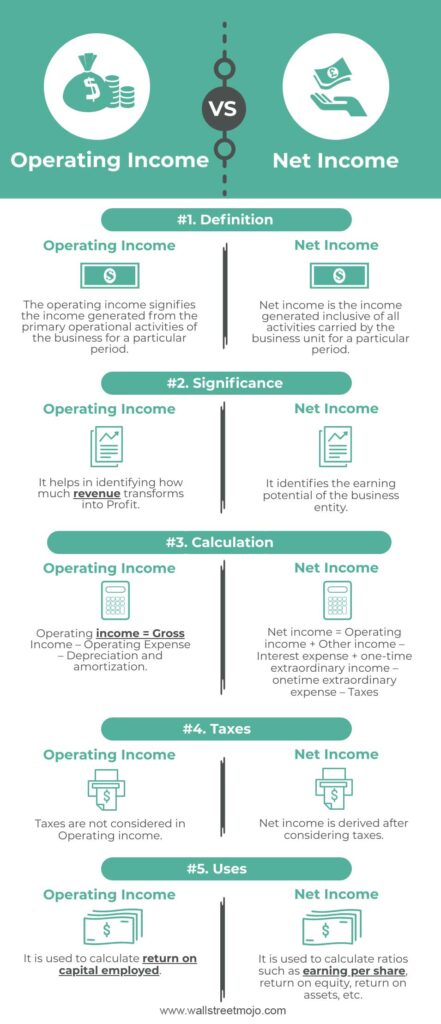
Gross rental income and net operating income (NOI) are often used together in rental property analysis, but they answer different questions. Gross rental income shows the top-line rent a property can bring in. Net operating income shows what remains after operating expenses are paid. Confusing the two can make a property look more profitable than it is, or make a lender’s underwriting look arbitrary when it is really focused on a different number. This article explains the differences between gross rental income vs net operating income, how each figure is used, and where practical calculations can go wrong.
What Gross Rental Income Means
Gross rental income is the total rent a property is expected to collect before operating expenses, debt service, and capital costs are considered. A practical first step in rental analysis is to estimate gross annual rental income from comparable market data for similar properties in the region [S2]. That estimate gives investors a revenue baseline: what the property could produce if it were rented at the assumed levels.
Gross rental income is a revenue figure, not a profit figure. It does not show whether taxes, insurance, maintenance, management, or utilities will consume most of the rent. Depending on the worksheet, gross rental income may be presented as a potential figure before vacancy and credit loss, or as an effective figure after those adjustments and after adding other income. The important point is to state which definition you are using. If one property’s gross rental income includes parking or laundry income and another’s does not, comparing them without adjustment can mislead.
Gross rental income is useful for screening rent levels, testing leasing assumptions, and building a revenue forecast. It is not a substitute for an operating profit measure, because it says little about the cost of running the property.
What Net Operating Income Means
Net operating income is gross rental income minus annual operating expenses. It represents the annual profit the property generates before debt service and capital expenditures [S2]. Another common expression is that NOI equals gross operating income minus operating expenses, found by subtracting costs such as property taxes, insurance, utilities, and maintenance from total rental and other income [S1].
Operating expenses commonly include management fees, cleaning, utilities, insurance, taxes, and maintenance [S2]. The exact list can vary by property type, lease structure, and local practice. A landlord who pays water and trash removal will have a different expense profile from one whose tenants pay those costs directly. Investors often track NOI annually rather than monthly because a full year smooths out seasonal costs such as landscaping or snow removal [S1].
NOI is calculated before debt service and capital expenditures [S2]. That means mortgage payments and major capital improvements are not operating expenses in the basic NOI formula. This is one reason NOI is useful for comparing property performance: it isolates the property’s operating results from the owner’s financing choices. A property with the same NOI can produce very different cash flow for two owners if one has a larger mortgage or a different interest rate.
Key Differences at a Glance
| Point of comparison | Gross rental income | Net operating income |
|---|---|---|
| What it measures | Top-line rent revenue before operating expenses | Operating profit after operating expenses |
| Starting point | Estimated rent from the property | Gross operating income, including rental and other income [S1] |
| Operating expenses | Not subtracted | Subtracted, including taxes, insurance, utilities, maintenance, management, and cleaning [S1][S2] |
| Debt service and capital expenditures | Not addressed | Excluded from NOI [S2] |
| Typical use | Revenue forecasting and rent screening | Comparing property performance and supporting lender presentations [S2] |
| Main limitation | Does not show the burden of operating costs | Does not show cash flow after mortgage payments or capital reserves |
Why the Difference Matters for Investors and Lenders
NOI is the figure most useful for comparing the performance of different properties and for demonstrating rental income to a lender in a mortgage application [S2]. A property with high gross rental income but high operating expenses can have a modest NOI. Conversely, a property with lower gross rent but efficient operations can produce a stronger NOI. Looking only at gross rental income hides that difference.
For cash flow, investors must go further than NOI. NOI is before debt service, so the investor still needs to subtract mortgage payments and plan for capital expenditures. A broader ROI analysis may also add a capital expense reserve, vacancy rate, and property appreciation alongside NOI [S2]; those items are separate from the core NOI formula. Keeping the layers separate makes it easier to see whether a property fails because of weak rent, high operating costs, heavy financing, or large capital needs.
Lenders and investors may use different expense assumptions, vacancy factors, and reserve requirements. Tax rules, lending standards, and local expense norms can change, so confirm details with current local guidance and a qualified professional rather than relying on a single worksheet.
Practical Calculation Walkthrough
A clean NOI calculation follows a simple sequence:
- Estimate gross annual rental income based on comparable market data for similar properties in the region [S2].
- List all annual operating expenses in full, including management fees, cleaning, utilities, insurance, taxes, and maintenance [S2].
- Subtract total operating expenses from gross income to produce NOI [S2].
- Keep debt service, capital expenditures, and capital reserves separate so you can analyze cash flow and returns without mixing them into NOI [S2].
In formula form: gross rental income − operating expenses = net operating income. If you use gross operating income instead, the formula is gross operating income − operating expenses = NOI [S1]. Either way, the key is consistency. Do not subtract mortgage interest in one property’s NOI and ignore it in another’s, and do not treat a new roof as an operating expense while treating routine maintenance as a capital item. State your assumptions and apply them the same way across properties.
Common Mistakes to Avoid
- Treating gross rent as profit. Gross rental income does not account for operating expenses, so it cannot show operating profitability.
- Deducting mortgage payments in NOI. NOI is before debt service [S2]. Mortgage payments belong in a cash-flow analysis, not the basic NOI calculation.
- Mixing capital expenditures with operating expenses. NOI is before capital expenditures [S2]. Major improvements and capital reserves should be handled separately.
- Omitting common operating costs. Management fees, cleaning, utilities, insurance, taxes, and maintenance can materially reduce NOI [S2].
- Using peak-season rent alone. Peak-rate multiplication is not a calculation [S2]. Build an annual revenue estimate that reflects realistic occupancy and expense patterns.
- Ignoring seasonality. Annual tracking smooths out seasonal costs such as landscaping or snow removal [S1], which can distort a single-month snapshot.
- Failing to define gross rental income. If one analysis includes other income and another does not, the comparison is not like-for-like. Keep labels and inclusions consistent.
How to Use Both Figures Together
Use gross rental income to test rent assumptions and build a revenue forecast. Use NOI to test operating profitability after ordinary expenses. Then use cash flow after debt service and capital reserves to test whether the investment meets the owner’s liquidity and return requirements. This layered approach is more reliable than asking either gross rental income or NOI to do every job.
The distinction between gross rental income vs net operating income is ultimately about purpose. Gross rental income answers “How much rent can this property generate?” NOI answers “How much operating profit remains after the property’s ordinary expenses?” Investors who keep those questions separate can compare properties more clearly, spot expense problems earlier, and present their numbers to lenders with fewer surprises.
Sources for Editorial Review
These are relevant pages found during drafting, not proof that any claim has been verified. Review factual statements and citations before publication.
- Editorial source lead [S1]: Net Operating Income (NOI): Formula and Calculation – Shopify (shopify.com)
- Editorial source lead [S2]: estimating ROI cottage rentals Ontario|Cottage Vacations (cottagevacations.com)





