Why the distinction matters for owners
If you own a business, your personal finances and your company’s finances are connected, but they are not the same thing. Personal net worth and business net worth answer different questions, use different inputs, and serve different purposes. Mixing them up can lead to overly optimistic retirement planning, poor lending decisions, or a misleading sense of financial security. This article explains the differences, shows how the two calculations relate, and offers practical ways to track both without double-counting.
Personal net worth includes your savings, investments, property, and other personal assets. Business net worth focuses solely on the value of your business and its assets, minus its liabilities. For owners, keeping these views separate while knowing how they connect is essential [S1].
What personal net worth measures
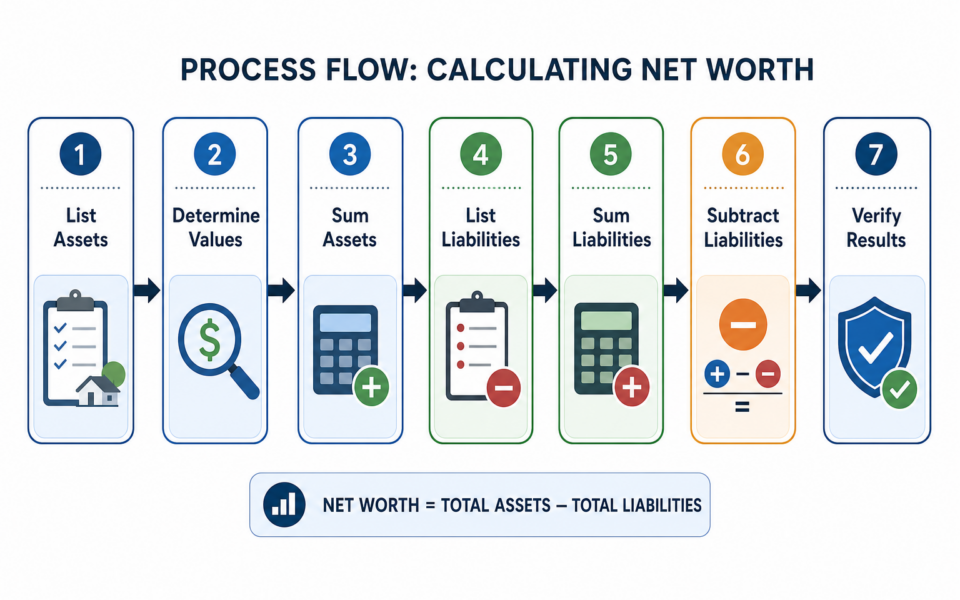
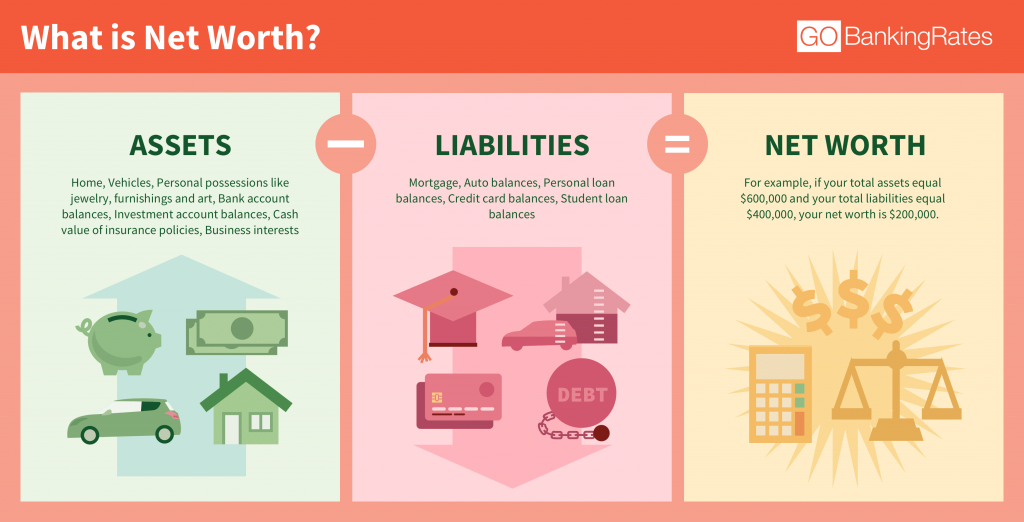
Personal net worth is a snapshot of what you own personally minus what you owe personally. The formula is simple: total personal assets minus total personal liabilities. The complexity comes from deciding what belongs on each side of the ledger when a business is involved.
On the asset side, you might include cash and savings accounts, retirement accounts, brokerage investments, your home and other personal real estate, vehicles, and personal property. If you own a business, your ownership interest — your business equity — generally belongs in your personal net worth as well, though the number is an estimate rather than a market price [S2].
On the liability side, include your mortgage, personal loans, credit card balances, student loans, and any personal guarantees you have made on business debt. That last item is easy to overlook but important: a personal guarantee can turn a business obligation into a personal one if the business cannot pay.
Personal net worth is useful for retirement planning, estate planning, applying for personal credit, and measuring progress toward financial independence. It reflects the resources you personally control.
What business net worth measures
Business net worth applies the same asset-minus-liability logic, but only to the company. Business assets can include cash, accounts receivable, inventory, equipment, vehicles titled to the company, intellectual property, and goodwill. Business liabilities can include accounts payable, business loans, leases, accrued expenses, and taxes owed.
For a small owner-operated business, the balance sheet may be the starting point, but book value often differs substantially from what the business would actually sell for. Equipment may be carried at cost while its resale value is lower. Goodwill may appear on the books after an acquisition but not reflect current market demand. Customer relationships, reputation, and proprietary processes may have real value that never appears on a balance sheet at all.
Business net worth matters for company-level decisions: borrowing, bringing in a partner, selling the company, or benchmarking performance against prior periods. It is a measure of the enterprise, not of your personal finances.
How to value business equity for personal net worth
Valuing a privately held business is an estimate, not a precise figure. Three common approaches are asset-based valuation, income multiples, and comparable sales [S2]. An asset-based approach adjusts the balance sheet toward fair market values. An income-based approach applies a multiple to earnings or cash flow. A comparable-sales approach looks at what similar businesses have sold for.
Because private business interests are difficult to sell quickly and often depend heavily on the owner, many owners apply a further discount. One practical approach is to track only 50 to 70 percent of the estimated value to leave room for illiquidity and key-person risk [S2]. This is a judgment call, not a rule, and the appropriate discount depends on your industry, the strength of your management team, and how transferable the business really is.
It also helps to be honest about the gap between what a business feels worth to its owner and what a buyer would pay. Buyers discount for key-person risk, transition difficulty, unknown liabilities, and market conditions. A business that feels like a $200,000 asset might sell for $120,000 when reality meets the market [S2]. For personal net worth tracking, conservative estimates usually serve you better than optimistic ones.
Once you have an estimate, you can include it as a single line item in your personal net worth statement, or break it into components if you prefer more detail [S2]. Whatever method you choose, document your assumptions so future comparisons are meaningful.
Common mistakes and a practical tracking routine
The most frequent error is double counting. If you list the business’s cash, equipment, and receivables as personal assets and also list your business equity as a personal asset, you have counted the same value twice. Pick one method: either include business equity as a single line, or include your share of specific business assets and liabilities. Do not do both.
Other common mistakes include:
- Ignoring personal guarantees. A guarantee on a business loan is a contingent personal liability. It may not be due today, but it affects your risk exposure.
- Treating an estimate as a fact. Business valuation is a range, not a precise number. Update it annually and note the method used.
- Mixing personal and business accounts. Complicated books make both net worth calculations unreliable and create tax risk.
- Forgetting taxes on retirement accounts and unrealized gains. The after-tax value of these assets may be lower than the stated balance.
- Using the same number for every purpose. A lender, a buyer, and your retirement plan may each need a different view of the business’s value.
A practical routine looks like this: update personal net worth quarterly using account statements; update business net worth at least annually, ideally after year-end financials are complete; and review how the two connect whenever you take on new debt, add a partner, or plan a major personal purchase. Keep a written note of the valuation method and discount applied so the numbers are comparable over time.
A side-by-side comparison
| Feature | Personal net worth | Business net worth |
|---|---|---|
| What it covers | Personal assets minus personal liabilities | Company assets minus company liabilities |
| Typical assets | Cash, investments, home, retirement accounts, business equity | Cash, receivables, inventory, equipment, goodwill |
| Typical liabilities | Mortgage, personal loans, credit cards, personal guarantees | Payables, business loans, leases, accrued taxes |
| Main purpose | Retirement, estate, and personal credit planning | Company borrowing, partnerships, and sale preparation |
| How precise | Mostly exact account balances; equity is an estimate | Book values may differ from market values |
| Update frequency | Quarterly or annually | Annually or before major transactions |
Bringing the two views together
Including your business value in your personal net worth can give you a clearer picture of your overall financial health [S1]. But that picture is only useful if the business figure is labeled as an estimate and treated with appropriate caution. A useful habit is to maintain two statements — one for the household and one for the company — plus a reconciliation page that shows exactly how the business equity line was derived. That way, if the business’s prospects change, you can update one assumption rather than rebuild the whole calculation.
Finally, remember that rules, tax treatment, and valuation norms vary by country and change over time. The general framework here is durable, but specific details — such as how certain assets are taxed or what discounts are typical — should be confirmed with a qualified accountant or financial professional for your situation.
Sources for Editorial Review
These are relevant pages found during drafting, not proof that any claim has been verified. Review factual statements and citations before publication.
- Editorial source lead [S1]: Net Worth Calculator: Including Business Value in Personal … (financegrowthtools.com)
- Editorial source lead [S2]: How to Include Business Assets in Personal Net Worth (financialaha.com)