Why a Sole Proprietorship Belongs on Your Personal Balance Sheet
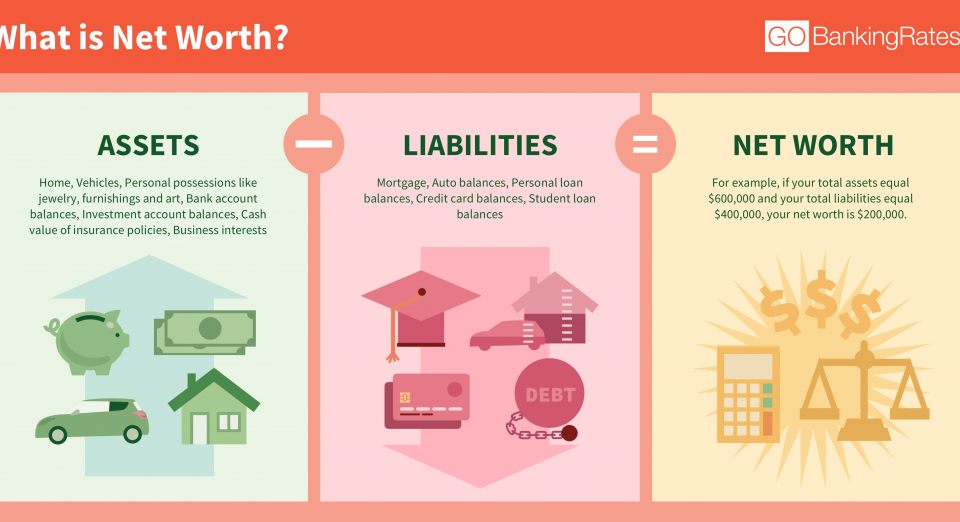
A sole proprietorship is not a separate legal entity from its owner, which means its value flows directly into your personal net worth. Unlike a corporation where share value is somewhat distinct from personal finances, a sole proprietorship’s assets, liabilities, and earning capacity are intertwined with your own. Understanding how to value it properly gives you a clearer picture of your true financial position, whether you are applying for a loan, planning for retirement, or preparing to sell.
The process requires separating business from personal, choosing an appropriate valuation method, and recognizing that some assets are harder to price than others. The sections below walk through each step in practical terms.
Step One: Separate Business Assets and Liabilities from Personal Ones
The first and most important step is drawing a clean line between what belongs to the business and what belongs to you personally. In a sole proprietorship, some business assets may double as personal ones—a vehicle used for both deliveries and family errands, a home office, or a computer shared with household use [S1]. It is best to keep personal assets and liabilities separate from business assets and liabilities, and where overlap exists, to be explicit about which portion you are counting as business value [S1].
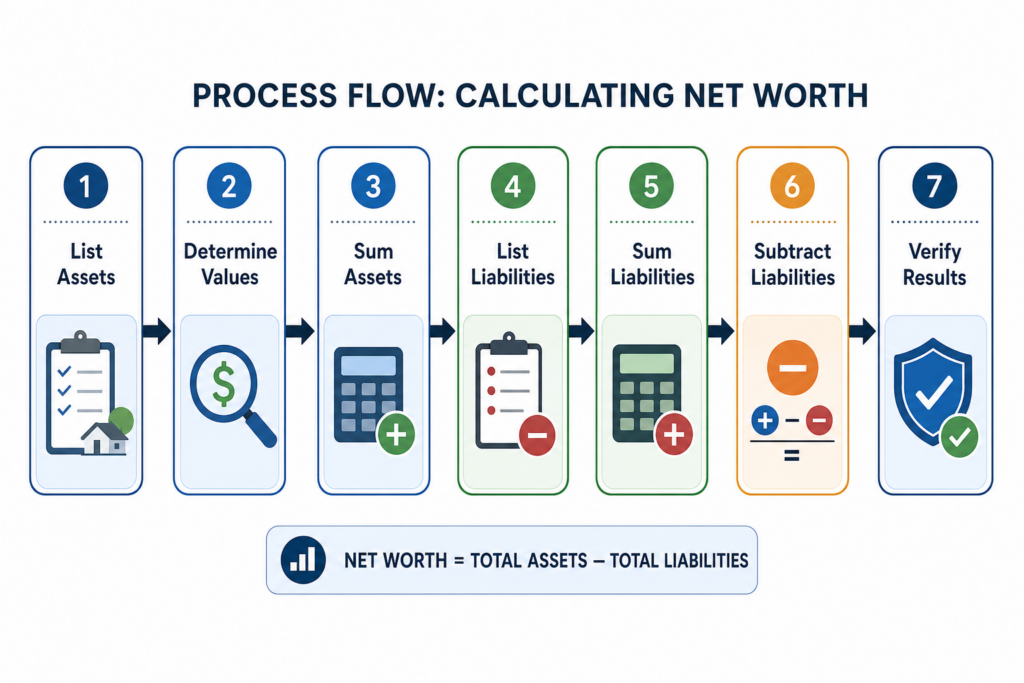
Create two lists. On the asset side, include cash in business accounts, accounts receivable, inventory, equipment, vehicles used predominantly for business, intellectual property, and any goodwill attached to the business name. On the liability side, include business loans, credit card balances used for business purchases, unpaid supplier invoices, and accrued taxes related to the business.
A simple worksheet helps:
| Category | Examples | Typical Valuation Approach |
|---|---|---|
| Tangible assets | Equipment, inventory, vehicles | Fair market value or depreciated book value |
| Financial assets | Cash, receivables | Face value, adjusted for collectability |
| Intangible assets | Brand, customer relationships, goodwill | Comparable sales or earnings-based estimate |
| Liabilities | Loans, payables, accrued taxes | Outstanding balance owed |
Once the lists are complete, the basic net asset calculation is straightforward: add up all the assets and subtract all the liabilities [S1]. That figure gives you a baseline equity value for the business. Note that the accuracy of this method depends heavily on how realistically each item is priced—book value on old equipment may overstate what a buyer would actually pay.
Step Two: Choose a Valuation Method That Fits the Business
Knowing what your business owns and owes is essential to valuing it correctly, but a net asset figure alone does not capture earning power [S2]. To get an accurate value, you need to use the right valuation methods, and mixing different techniques gives you a fuller picture of what the business is worth [S2]. Three approaches are commonly used:
- Asset-based valuation. Sum the fair market value of assets and subtract liabilities. This works best for asset-heavy businesses such as equipment rental or retail with significant inventory. It tends to undervalue service businesses whose main value is the owner’s skill and reputation.
- Income-based valuation. Estimate what the business earns and capitalize that earnings stream. A common shortcut for small sole proprietorships is to apply a multiple to seller’s discretionary earnings—profit plus owner compensation and certain add-backs. The multiple varies widely by industry and size, so treat any single number as a starting point rather than a rule.
- Market-based valuation. Compare the business to similar sole proprietorships that have sold. This is difficult for very small or unusual businesses because reliable comparable sales data is scarce, but it provides a useful sanity check.
For personal net worth purposes, many owners use a blend: the asset-based figure as a floor, and an income-based estimate to capture goodwill and going-concern value. If the numbers diverge sharply, investigate why before picking one.
Step Three: Handle the Hard-to-Value Assets Carefully
Some assets are simple to sell and value, such as equipment or inventory, while others—like company brand and goodwill—are difficult to value and require a more complex process [S1]. Goodwill represents the premium a buyer would pay for established customer relationships, reputation, and repeat business. For a sole proprietorship, goodwill is often inseparable from the owner personally, which means it may be worth less to a buyer than the owner assumes.
Practical ways to approach intangibles:
- Review customer concentration. If one client provides most revenue, goodwill is fragile and should be discounted.
- Check whether the business name, website, and trademarks are transferable and registered.
- Consider whether recurring revenue exists—subscriptions, retainers, or service contracts are more valuable than one-off sales.
- Be conservative. For net worth purposes, an overstated goodwill figure creates a false sense of security.
A proper valuation of complex assets is typically performed by a neutral third party who values each asset separately and also assesses the business as a whole [S1]. For a personal net worth statement, a full professional appraisal is usually unnecessary, but a qualified appraiser can be worth the cost if you are selling, litigating, or applying for significant financing.
Step Four: Convert Business Value into a Personal Net Worth Figure
Once you have a defensible business value, integrate it into your personal balance sheet. Because a sole proprietorship is not a separate entity, you generally should not list the business value and the underlying business assets as two separate line items—that double counts. Choose one presentation:
- Consolidated approach: List each business asset and liability individually alongside personal items. This is more transparent and easier to audit.
- Entity approach: List a single “business equity” line equal to assets minus liabilities, then list personal assets separately. This is simpler but obscures what is inside the business.
Whichever you choose, apply it consistently across periods so you can track changes. Also account for taxes that would be triggered by selling business assets, since a sole proprietorship’s sale is generally treated as a sale of assets and the after-tax value may be materially lower than the gross figure.
Finally, revisit the valuation annually or whenever circumstances change significantly—a major new contract, the loss of a key client, or a large equipment purchase. Details of valuation multiples, tax treatment, and appraisal standards can change over time, so confirm current guidance with an accountant or valuation professional before relying on any figure for a major decision.
A Worked Summary
Suppose a consultant owns a sole proprietorship with $40,000 in cash and receivables, $15,000 in equipment at fair market value, and $25,000 in estimated goodwill, against $12,000 in business liabilities. Net asset value is $55,000 before goodwill, or $80,000 including it. If the owner is conservative, listing $60,000–$80,000 as business equity on a personal balance sheet is reasonable, with a note explaining the range and the assumptions behind the goodwill estimate. That single line, added to personal assets and reduced by personal debts, produces a more honest net worth than either ignoring the business entirely or counting every asset twice.
The core discipline is separation, method selection, conservative treatment of intangibles, and consistent presentation [S1][S2]. Done that way, valuing a sole proprietorship becomes a manageable annual exercise rather than a mysterious one.
Sources for Editorial Review
These are relevant pages found during drafting, not proof that any claim has been verified. Review factual statements and citations before publication.
- Editorial source lead [S1]: Valuing Assets in a Sole Proprietorship – Peak Business Valuation Sole Proprietorship Net Worth Computation: A Simple Guide How to Calculate Net Worth of Sole P (peakbusinessvaluation.com)
- Editorial source lead [S2]: How to Value a Sole Proprietorship? – Arrowfish consulting (arrowfishconsulting.com)