Why Annuity Surrender Value Belongs in Your Net Worth
Net worth is a simple idea with a lot of messy edges: add up what you own, subtract what you owe. An annuity sits in the “what you own” column, but the number you write down is not always obvious. If you list an annuity at its full account value while a surrender charge is still in effect, you may overstate your net worth. If you ignore the annuity entirely because it is “locked up,” you understate it. Neither approach is accurate.
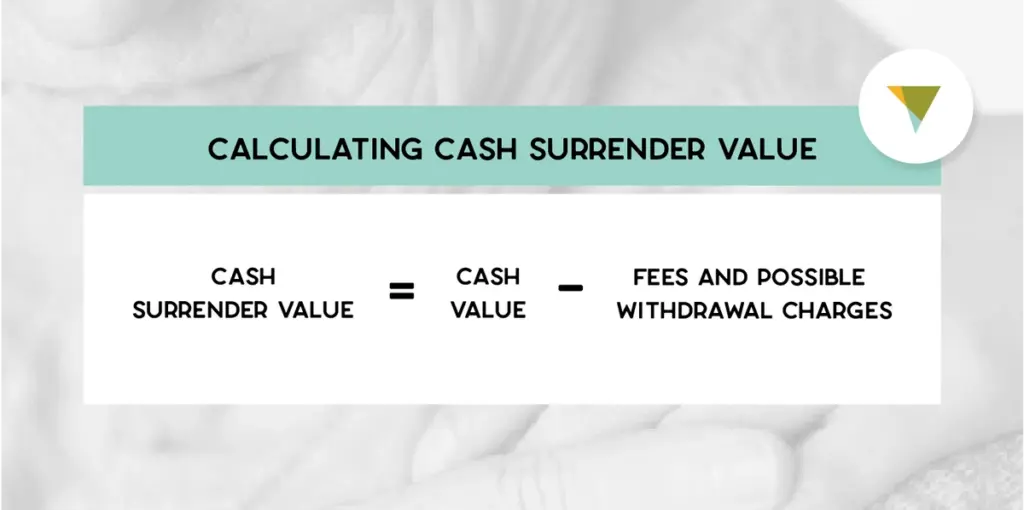
The practical middle ground is to record the annuity at its surrender value, at least during the years when a surrender charge applies. The surrender value of an annuity is the actual amount you receive from the insurance company if you cash out early — it’s the cash value of the annuity minus the surrender charges and tax penalties [S1]. Because it reflects what you would actually walk away with, it is usually the more honest figure for a personal balance sheet. This article explains how to calculate that number, when to use it, and what to leave out or footnote so your net worth statement stays defensible.
Annuity Account Value vs. Surrender Value vs. Cash Value
Three terms get used almost interchangeably in casual conversation, but they are not the same thing, and mixing them up is the most common source of error. The account value is the balance the insurer tracks internally for you — the value your contract shows before any exit charges. The surrender value is the amount the insurer would actually pay you if you terminated the contract on a given day. During the surrender period, that figure is lower than the account value by the surrender charge, and possibly by other adjustments spelled out in the contract.
The difference matters because a statement mailed to you often shows the account value prominently, and it is easy to copy that number into a spreadsheet without thinking. Many annuity statements do disclose the surrender value separately, so check before you type anything. Note also that the terminology varies between fixed, indexed, and variable annuities; for variable contracts, the “cash value” may be further adjusted by market value or other contract provisions. The exact mechanics are contract-specific, so the only authoritative source for your own numbers is your annuity contract and the current statement or insurer portal.
How to Count Annuity Surrender Value: Step by Step
The arithmetic itself is usually straightforward once you have the right inputs. The harder part is sourcing them correctly and applying the right surrender charge percentage for the right year.
- Find the current account or cash value. Pull the latest statement or log in to the insurer’s portal. Use the most recent valuation date you can get, and note that date so your net worth calculation stays consistent with other assets.
- Identify the surrender charge percentage for the current contract year. Surrender schedules are typically set out in the contract’s fee table. A common pattern is a multi-year schedule that starts high and steps down each year — for example, a seven-year surrender period that begins with a 7% charge in year one and decreases by 1% per year until it reaches zero [S1].
- Multiply the value by the surrender charge percentage. If the account value is $50,000 and the current-year charge is 5%, the charge is $2,500.
- Subtract the charge from the value. In the example, the pre-tax surrender value is $47,500. This is the figure you would use in your net worth if you are listing the annuity at its exit value.
- Write down the assumptions. Record the surrender charge percentage, the contract year, and whether any other adjustments (such as a market value adjustment on certain fixed contracts) apply. This makes your figure reproducible next quarter.
Surrender periods commonly run between 5 and 10 years, with charges that start somewhere around 5–10% and decline annually [S2]. Those are general ranges, not rules; your contract controls. If you are past the surrender period, the surrender value and the account value are typically the same, and the calculation collapses to simply recording the account value.
A Simple Calculation Table
The table below illustrates how the same $50,000 account value translates into different surrender values across a hypothetical seven-year schedule in which the charge starts at 7% and drops 1% per year [S1]. These percentages are illustrative only — substitute your own contract’s schedule.
| Contract Year | Surrender Charge % (illustrative) | Charge in Dollars | Surrender Value on $50,000 |
|---|---|---|---|
| 1 | 7% | $3,500 | $46,500 |
| 2 | 6% | $3,000 | $47,000 |
| 3 | 5% | $2,500 | $47,500 |
| 4 | 4% | $2,000 | $48,000 |
| 5 | 3% | $1,500 | $48,500 |
| 6 | 2% | $1,000 | $49,000 |
| 7 | 1% | $500 | $49,500 |
| 8+ | 0% | $0 | $50,000 |
Two things stand out. First, the “cost” of using surrender value instead of account value shrinks each year, so your net worth figure should rise annually even if the account balance is flat. Second, the difference is not trivial early on: a 7% charge on $50,000 is $3,500, which is real money for a net worth statement.
Taxes and Other Deductions: What to Leave Out of Net Worth
Notice that the Gainbridge definition folds tax penalties into the surrender value itself [S1]. For net worth purposes, many people prefer to separate the two concepts. Net worth is not a tax return, and the same logic that keeps income taxes off your home’s value should generally keep income taxes off your annuity’s value. Mixing in speculative tax liabilities makes the figure harder to compare year over year.
The workable approach is to record the pre-tax surrender value — account value minus the surrender charge — and footnote the tax position. If the contract is a qualified annuity inside an IRA, ordinary income tax will apply to withdrawals, but so will it for every other IRA asset you list. If it is a non-qualified annuity, gains are typically taxed as ordinary income and, for withdrawals before age 59½, a 10% federal penalty may apply to the taxable portion; the exact treatment depends on your situation and current law. State rules can differ too. For these reasons, treat tax estimates as annotations, not balance-sheet entries, and confirm specifics with a tax professional or the contract’s tax disclosure rather than relying on a general article.
Net Worth Reporting in the Accumulation and Payout Phases
Most annuities spend years in the accumulation phase, where the account value grows and no payments are being made. During this phase, the surrender-value approach described above works cleanly. Complications arise when you annuitize — convert the contract into a stream of income — or begin taking withdrawals.
Once an annuity is annuitized, there is generally no surrender value to speak of; the contract has become an income promise, and its “value” to you is the present value of future payments, which is not a number most consumers can calculate reliably. A reasonable practice is to exclude an annuitized contract from net worth, footnote it with the monthly income amount and the payment type (life-only versus period certain), and note that its value depends on longevity and payment terms. Similarly, if you are taking withdrawals within the surrender period, check how the contract applies charges to partial withdrawals — some allow a free withdrawal amount each year, and charges may apply only to amounts above that threshold. For the net worth figure, the simplest consistent rule is: record the amount the insurer would pay you today if you fully surrendered, whatever phase the contract is in.
Practical Tips for Consistent, Defensible Numbers
- Pick one valuation date. Use the same date for the annuity as for your other accounts, or note the mismatch. A statement that is three months old is fine as long as you label it.
- Recalculate after each contract anniversary. The surrender charge steps down on a schedule, so last year’s figure is stale. This is the single most common error in annuity net worth entries.
- Disclose the method. A single footnote — “annuity recorded at surrender value, 4% charge, contract year 4” — makes the number auditable and comparable.
- Don’t confuse surrender value with “what I paid in.” Premiums paid, account value, and surrender value are three different numbers; only the last one reflects an exit today.
- Know when details change. Surrender schedules, tax treatment, and contract features are set by your contract and by law, and both change. The ranges cited in general articles (5–10 year periods, 5–10% starting charges) [S2] are illustrative, not guarantees — verify against your own documents before relying on any figure.
Used this way, the surrender value becomes a small but useful line item: a conservative, exit-based estimate of what the annuity is actually worth to you today. It keeps your net worth honest without overcomplicating a document that should stay simple enough to update every quarter.
Sources for Editorial Review
These are relevant pages found during drafting, not proof that any claim has been verified. Review factual statements and citations before publication.
- Editorial source lead [S1]: Annuity Surrender Charge: How It Works & Costs (gainbridge.com)
- Editorial source lead [S2]: What Is a Annuity Surrender Charge and How Do I Avoid Them (apsitaxes.com)