
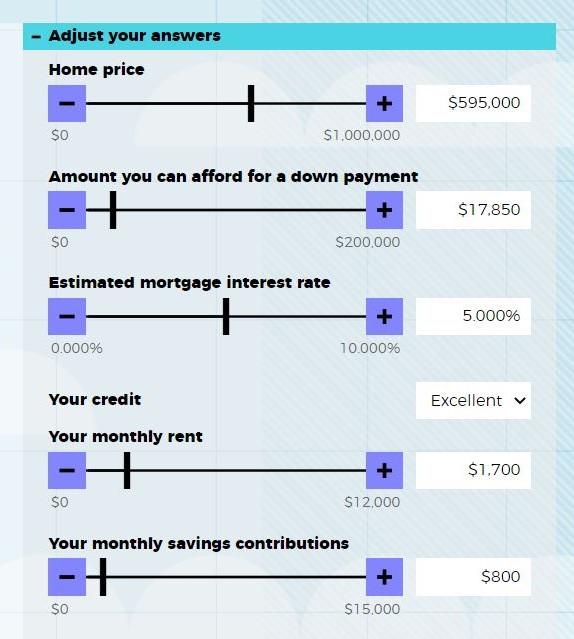
When you buy a home, the down payment is the most visible check you will write. But its effect on your finances goes far beyond the closing date. A down payment changes your net worth in several distinct ways, some immediate and some stretching decades into the future. Some of those changes are easy to see in a spreadsheet; others show up as flexibility, risk, or opportunity cost. This article walks through how a down payment moves your net worth — at closing, over time, and in relation to the rest of your financial life.
What a down payment actually does to your net worth
Net worth is a simple idea: everything you own minus everything you owe. A down payment affects both sides of that equation at once, and at first the net effect can look like a wash. Suppose you take $60,000 from a savings account and put it toward a $300,000 home. Your cash drops by $60,000, but your home equity rises by the same $60,000, so your net worth is unchanged on the day you close. You have not gotten richer or poorer; you have changed the form of your assets.
That framing matters because people often treat a down payment as a purchase. It is not. It is a transfer from one asset category (cash) to another (home equity). The interesting questions are what happens to each side afterward: how the home value and mortgage balance change over time, what the cash could have earned if invested elsewhere, and how much risk you have concentrated in a single property. The CFPB notes that the size of your down payment affects not just the cash you pay at signing but also the overall cost of your mortgage [S2], which is one reason the choice deserves more than a glance.
A useful mental model is to separate three effects. First, the swap: cash becomes equity. Second, the leverage: a mortgage magnifies gains and losses on the entire home value, not just on your down payment. Third, the opportunity cost: money inside a home is generally harder to access and less diversified than money in a brokerage or savings account. Each of these shapes your net worth in different ways.
The immediate swap: cash out, equity in
At closing, the accounting is close to neutral, but three details can tilt it slightly. Closing costs, such as lender fees, title charges, and recording fees, are real expenses that reduce net worth immediately. Prepaid items like property taxes and insurance are essentially timing shifts rather than losses. And if the home appraises for less than the purchase price, your equity starts below what you put in.
There is also a practical liquidity change. Cash in a savings account is available for emergencies; equity in a home is not. You cannot withdraw a few thousand dollars from your house without selling, borrowing against it, or using a home equity line of credit, and each of those has costs and qualifications. So even when net worth stays flat, financial resilience may drop. That is not an argument against down payments — it is a reason to keep a separate emergency fund rather than draining every available dollar for the down payment.
One more immediate effect: a larger down payment usually means a smaller loan. A smaller loan typically carries lower monthly payments and may reduce or eliminate mortgage insurance requirements, depending on the loan program and lender. Those savings do not show up as a one-time net worth boost, but they improve your monthly cash flow, which frees money that can be saved or invested over time.
The leverage effect: how the mortgage magnifies your equity
This is where the down payment gets interesting. When you buy with a mortgage, you control an asset worth the full purchase price while having paid only part of it. If home values rise, the gain accrues to your equity, not proportionally to your down payment. Consider a simple illustration:
| Scenario | Home price | Down payment | Home value after a 5% rise | Equity gain before costs |
|---|---|---|---|---|
| 10% down | $300,000 | $30,000 | $315,000 | $15,000 (50% of down payment) |
| 20% down | $300,000 | $60,000 | $315,000 | $15,000 (25% of down payment) |
The dollar gain is the same in both cases, but the percentage return on the cash invested is much higher with the smaller down payment. That is leverage working in your favor. The same mechanism works in reverse: if the home value falls 5%, the smaller-down-payment buyer loses a much larger share of their invested cash. Leverage does not create value; it concentrates both gains and losses onto a smaller equity base.
A larger down payment reduces this magnification. You own more of the home outright, so your equity is less sensitive to price swings as a percentage of what you put in. That is generally a stabilizing force for net worth. It also reduces the risk of ending up underwater, owing more than the home is worth, which can limit your ability to sell or refinance if your circumstances change. The trade-off is that a very large down payment may leave you with less diversification and less cash for other goals.
The opportunity cost: what the money could have done elsewhere
Every dollar in a down payment is a dollar not invested somewhere else. Over long periods, diversified investments such as stock and bond funds have historically offered growth potential that a primary residence may or may not match, depending on local housing markets. A home is also undiversified: your financial outcome is tied to one property in one neighborhood, alongside your job, your community, and much of your daily life.
That does not mean investing beats homeownership. A home provides shelter you would otherwise rent, and it can build equity through principal payments over time. But the comparison is worth making honestly. If you put down 20 percent instead of 10 percent, the extra 10 percent is money that could have stayed in a retirement account or a taxable brokerage account. Whether that trade is favorable depends on your time horizon, your risk tolerance, local home price trends, and the return you expect on other investments. No single rule fits everyone, and past performance in either category does not guarantee future results.
There is also a concentration concern. Many homeowners end up with a large share of their net worth in home equity, alongside other investments and cash, minus debts like the mortgage [S1]. That can be fine when the home is affordable and the rest of the portfolio is diversified. It becomes problematic when too much of your net worth is tied up in one property, because it exposes you to more risk and prevents you from pursuing other investments [S1]. A down payment decision is partly a diversification decision.
How much should you put down?
There is no universal right answer, but a few practical considerations can guide the choice.
- Program minimums: Many loan programs allow down payments well below 20 percent, though a lower down payment may mean mortgage insurance, a higher rate, or both. Check current program rules with a lender, since guidelines change.
- The 20 percent benchmark: Putting 20 percent down is often described as a good target if you can afford it, but depending on how the rest of your net worth is allocated, more may not necessarily be better [S1].
- Emergency reserves: Keep enough cash outside the home to cover several months of expenses and unexpected repairs. A house with no savings cushion can turn a small problem into debt.
- Closing costs and moving expenses: Budget for these separately so they do not eat into your reserve or force you to borrow.
- Total cost of the mortgage: Compare loan offers side by side, because the down payment affects the overall cost of borrowing, not just the amount financed [S2].
- Time horizon: If you may move within a few years, a larger down payment reduces the risk of losing money after selling costs. If you plan to stay for a decade or more, the calculus shifts.
A useful exercise is to model two or three down payment levels and compare the resulting monthly payment, cash reserve, and remaining investable assets. Then ask which version of your financial life you would rather have if home prices fell, if you lost a job, or if investment returns were disappointing. The answer often points to a middle path: enough down to keep the loan manageable and the equity stable, but not so much that you become cash-poor or overconcentrated.
Tracking the effect over time
A down payment’s influence on net worth grows as the mortgage amortizes. Each monthly payment includes principal, which increases equity directly. Home price changes add or subtract from equity. And the cash you did not put into the home, if invested, may compound. Revisiting these numbers once a year — home value estimate, mortgage balance, other assets, and debts — gives you a clearer picture than any single rule of thumb.
Keep in mind that details such as loan limits, mortgage insurance rules, tax treatment, and program requirements can change, and they vary by lender and location. For decisions specific to your situation, consult a qualified lender or financial professional rather than relying on general guidance. Used thoughtfully, a down payment is not just a closing cost; it is one of the larger levers you can pull on your long-term net worth.
Sources for Editorial Review
These are relevant pages found during drafting, not proof that any claim has been verified. Review factual statements and citations before publication.
- Editorial source lead [S1]: How Much of Your Net Worth Should Be Tied Up in a Home ? (greenresidential.com)
- Editorial source lead [S2]: Your down payment decision – Consumer Financial Protection Bureau (consumerfinance.gov)





